Abraham
One man called out — and through him, all nations blessed
All the families of the earth will be blessed through you.
Bereshit 12:3
Out of a scattered world, the Father chose one man.
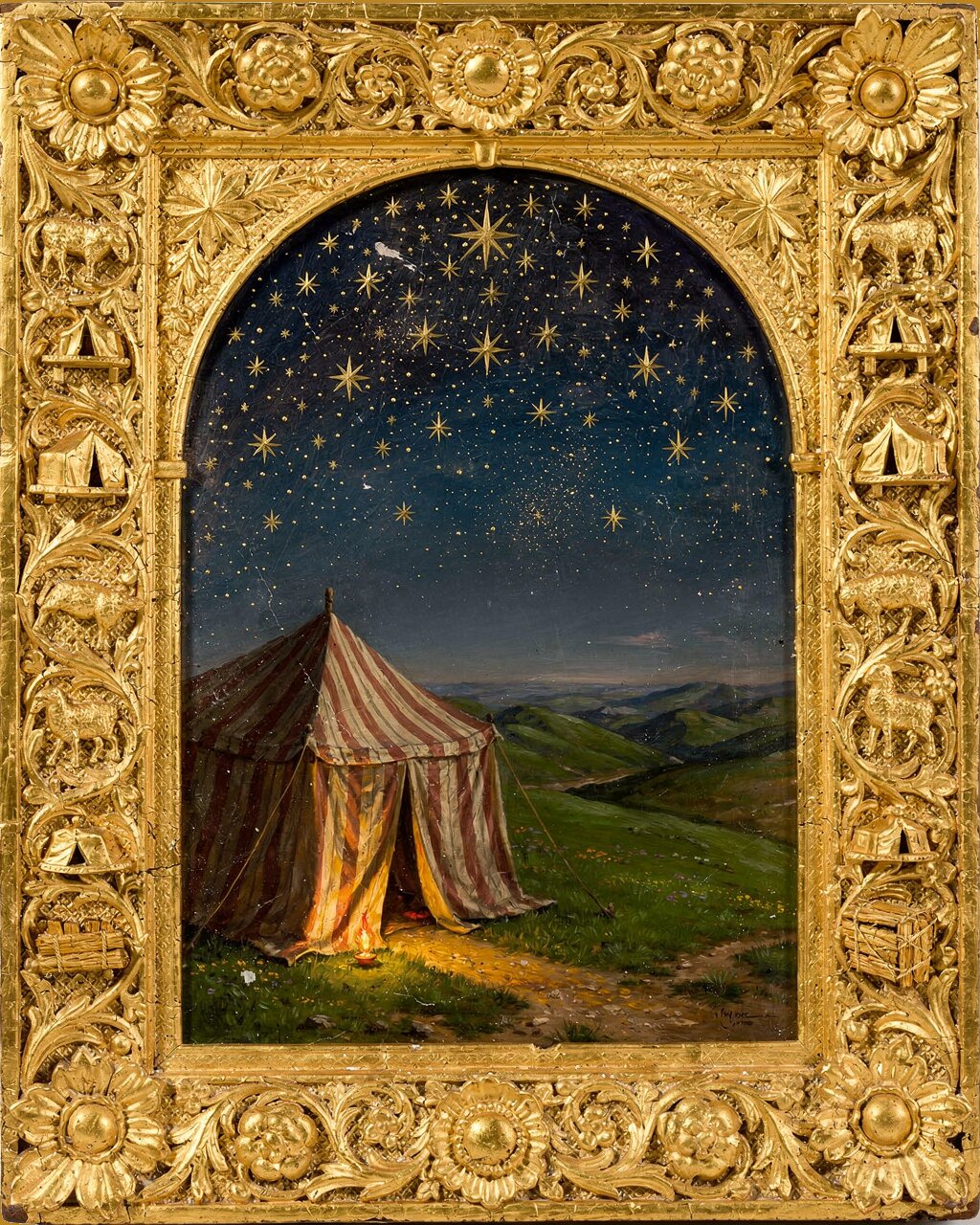
There was nothing remarkable about Abram of Ur. He worshipped what his fathers worshipped and had no children to carry his name. To him, with no warning, came the voice of Elohim: Leave your country, and your relatives, and your father's house, and go to the land that I will show you. And then a promise so large it could only be kept by Elohim Himself — I will make of you a great nation. I will bless you and make your name great. All the families of the earth will be blessed through you.
There it is, the whole shape of the Story in a single sentence. Back in the garden the curse had reached every family of the earth; now the blessing is aimed at every family of the earth. The Father narrows His work down to one man precisely so that He can one day open it back out to everyone. The promise to Abraham is not favouritism — it is the rescue plan with a return address, and the address is His Son.
So Abram went, not knowing where he was going, and that going was counted to him as righteousness. He believed Elohim, and Elohim credited it to him as right standing — not because Abram had earned it but because he trusted the One who promised. This is how anyone has ever been made right with the Father: not by performance but by faith in His word. Centuries later it would be said plainly that those who believe are the true children of Abraham, and that the blessing promised to all nations was always Yeshua.
In time Elohim sealed His covenant with Abram and gave him a new name — Abraham, father of a multitude. Then the promise was tested to its root: Elohim gave Abraham and Sarah a son in their old age, Isaac, the child of laughter and the bearer of everything promised. And then Elohim asked for him back — take your son, your only son, whom you love, and offer him there as a burnt offering. Abraham walked up the mountain with the wood laid on his son's shoulders and the knife in his own hand, trusting that Elohim could raise the dead if He had to. At the last moment the voice stopped him, and there in a thicket was a ram, caught by its horns — a substitute, provided by Elohim, dying in the son's place. Abraham named that place YHWH Will Provide — YHWH will provide. He had been shown, from far off, the very heart of the Story: a father, an only son he loved, the wood carried up a hill, and a sacrifice that Elohim Himself would supply. One day another Father would climb a hill with His only born Son, and there would be no voice to stop it and no ram in the thicket — because that time the beloved Son was the Lamb, and the Father gave Him on purpose.
The covenant — the covenant — passed down the line. To Isaac, then to Jacob, the schemer whom Elohim wrestled into a new name, Israel, and from whom came twelve sons. The promise survived their jealousy and cruelty: the brothers sold Joseph into slavery in Egypt, and yet through that very betrayal Elohim positioned Joseph to save many lives, including theirs, through a famine. What they meant for evil, Elohim meant for good. It is a pattern you will see again at the centre of the Story, on a far darker hill: the worst thing people ever did becoming the means of the world's rescue.
By the end of this movement the chosen family is a household of seventy souls, sheltering in Egypt, carrying a promise far bigger than themselves. They have no land of their own, no nation yet, no king, no temple — only the word of the Father that through them all the earth would be blessed. It would have looked like very little to hang a world's hope on. But the One who spoke the light had spoken again, and His promises do not return to Him empty. The blessing for every family of the earth was on its way, and His name would be Yeshua.