The Son

The Word made flesh.

Twelve chapters in Yeshua — the Word made flesh, from the promise in the Garden to the throne. Tap a card to read the chapter, then flip it back.

Chapter 1 of 12The Promised One
Chapter 1 of 12

The Promised One

Yeshayahu 53

Prophecies of the Mashiach across the Tanakh

Yeshayahu 53“Surely He has borne our griefs and carried our sorrows; yet we esteemed Him stricken, smitten by Elohim, and afflicted. But He was pierced for our transgressions, He was crushed for our iniquities; the punishment that brought us peace was upon Him, and by His wounds we are healed.”

Before the exile from Eden was complete, Elohim embedded a promise in the curse: the seed of the woman will crush the serpent's head. Redemption was planned from the beginning.

Yaakov prophesied that the ruler would come from Yehudah. Centuries later, Mattityahu opens his Besorah with a genealogy proving Yeshua's royal line — from Avraham through David through Yehudah.

But you, Beit Lechem Ephrathah, though you are small among the clans of Yehudah — out of you will come a ruler. Seven hundred years before Yeshua's birth, the address was given.

The virgin shall conceive and bear a son, and shall call his name Immanu'el. Not just a prophet, not just a king — Elohim Himself, dwelling with His people.

Written 700 years before Yeshua, Yeshayahu 53 describes a servant who bears the sins of many. The Tanakh itself points to what is coming.

Tehillim 22 opens with the very words Yeshua cried from the cross. It describes pierced hands, divided garments, and public mockery — written centuries before crucifixion existed as a practice.

Rejoice greatly, O daughter of Tzion! Your king comes to you, humble, riding on a donkey. Not in conquest but in peace. This king is unlike any other.

Chapter 2 of 12The Incarnation
Chapter 2 of 12

The Incarnation

Lukas 1:26-38

Elohim enters creation as a child

A malak appeared to a young woman in Nazareth. The Creator of the universe asked permission to enter His creation through her body. And she said yes.

The Creator of the universe entered His creation as a helpless infant, born to a young Yehudi woman in a small town. The Elohim of all chose humility.

Not to kings, not to the Sanhedrin — to shepherds in a field. The good news of great joy came first to those the world overlooks. The kingdom reverses everything.

Yochanan opens his Besorah echoing Bereshit: 'In the beginning.' The Word who spoke creation into existence "became flesh and lived amongst us" (Yochanan 1:14) — tabernacled in flesh.

Shimon held the baby and said: My eyes have seen your salvation. Anna, who had waited decades, gave thanks. Patient faith is rewarded with encounter.

Out of Mitzrayim I called my son. What was true of Yisrael as a nation became true of Yeshua as a person. He is the faithful Yisrael, the one who succeeds where the nation failed.

Chapter 3 of 12Immersion and Temptation
Chapter 3 of 12

Immersion and Temptation

Mattityahu 3:13-17

Anointed and tested before ministry begins

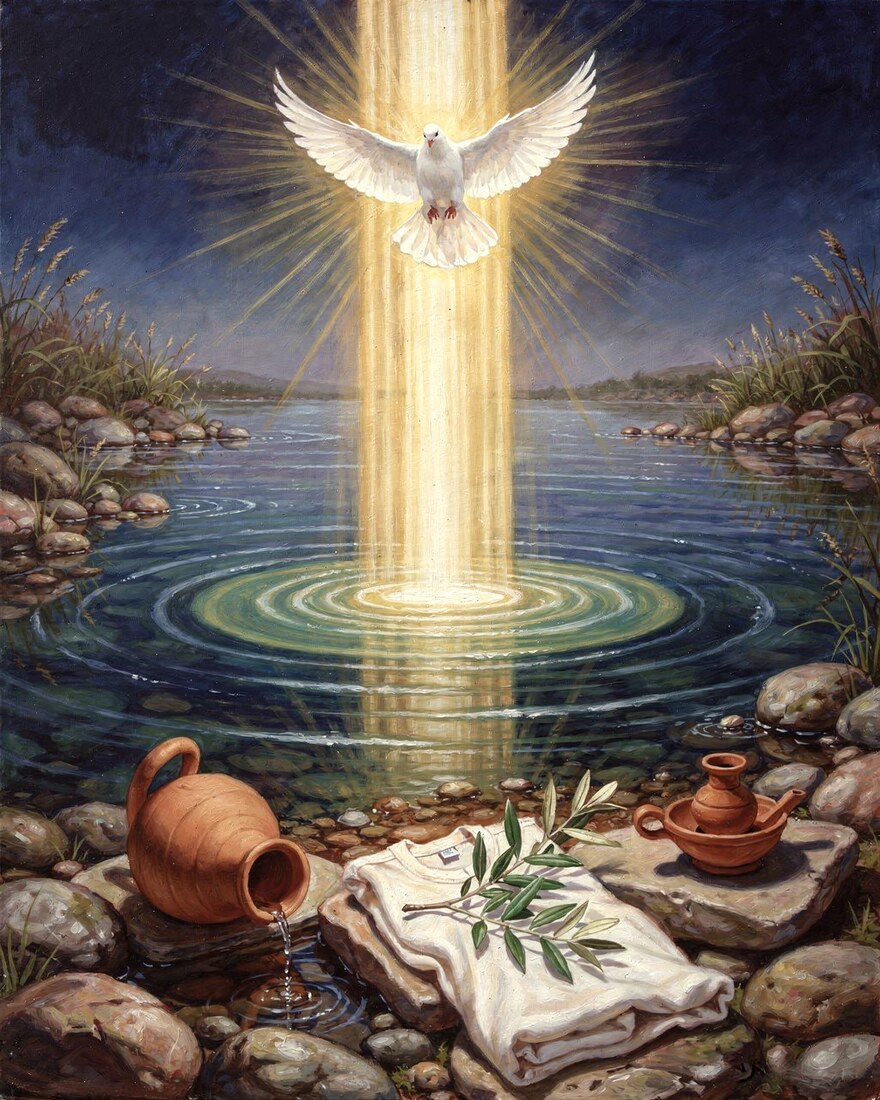
Yeshua didn't need cleansing. He entered the water to fulfil all righteousness. And heaven opened: This is my beloved Son, in whom I am well pleased.

Led by the Ruach into the wilderness. Forty days — echoing Yisrael's forty years. But where Yisrael failed, Yeshua stood. Every temptation answered with Scripture.

In His hometown synagogue, Yeshua unrolled the scroll to Yeshayahu 61. Good news to the poor, freedom for the captive. Today this is fulfilled in your hearing. Then they tried to kill Him.

Follow me, and I will make you fishers of men. Immediately they left their nets. No deliberation, no planning committee. The call demands a response.

The people were amazed — He taught as one having authority, not as the scribes. And even the unclean spirits obeyed. This was someone entirely new.

Chapter 4 of 12The Teacher
Chapter 4 of 12

The Teacher

Yochanan 3:1-21

Parables and wisdom that overturned the world

A HaPerush, a teacher of Yisrael, came to Yeshua with questions. The answer he received changed everything: the kingdom requires a new birth, a transformation from the inside out.

Yeshua's greatest sermon turns the world's values upside down: the meek inherit the earth, the peacemakers are Elohim's children, and love extends even to enemies.

The same seed falls on different soil. The Word is constant — the variable is the heart that receives it. What kind of ground are you giving Elohim to work with?

The most famous parable ever told. The younger son who wasted everything. The older son who resented grace. And a father who ran. The story is about the Father.

A priest passed by. A Levi passed by. But a despised Shomroni stopped. Love your neighbour means everyone — especially the one you'd rather avoid.

Abide in me. Not try harder, not perform better — abide. Stay connected. The fruit comes from the connection, not the effort.

They came because He fed them. He told them: I am the bread of life. Whoever comes to me will never hunger. He wasn't offering food — He was offering Himself.

Chapter 5 of 12The Healer
Chapter 5 of 12

The Healer

Markos 1:40-45

Miracles as signs of the kingdom breaking in

Moved with compassion, He stretched out His hand and touched him. No one touched a leper. But Yeshua crossed every barrier religion had built.

Friends tore open a roof to lower their paralysed friend. Yeshua said: Your sins are forgiven. Then: Get up and walk. He healed the deeper wound first.

He was asleep in the back of the boat. They panicked. He stood up and rebuked the wind. Peace. Be still. And there was a great calm. The Creator commands creation.

A synagogue leader's daughter was dying. A bleeding woman touched His garment. Both were healed. Both required faith in the middle of desperation.

A boy's lunch fed a multitude. The miracle wasn't just provision — it was a sign. Yeshua is the one who satisfies, the prophet greater than Moshe.

I am the resurrection and the life. Four days dead. The stone rolled away. El'azar, come out! Death obeys the voice of the Son. And Yeshua wept — power and compassion together.

Chapter 6 of 12The Kingdom Preacher
Chapter 6 of 12

The Kingdom Preacher

Mattityahu 5:1-12

The upside-down values of Elohim's reign

The constitution of the kingdom. Everything the world values is reversed. The last are first. The humble are exalted. The hungry are filled.

Not you should be salt — you ARE salt. Identity, not assignment. If the salt loses its saltiness, it is worthless. Be who you are.

Love your enemies. Pray for those who persecute you. This is not natural — it is supernatural. Only the Ruach can produce this kind of love.

Not long prayers. Not public displays. Go into your room. Pray like this. Adonai's Prayer is a template for intimacy, not a formula for performance.

Seek first the Kingdom of Elohim and His righteousness, and all these things will be added. Worry assumes you are alone. Faith knows the Father sees.

Everyone who hears these words and does them is like a wise man who built his house on rock. The storm came — and it stood. Obedience is the foundation.

Chapter 7 of 12Conflict with Religion
Chapter 7 of 12

Conflict with Religion

Markos 2:23-3:6

Yeshua confronted empty piety and power

They accused Him of breaking the Shabbat. He healed a man's withered hand on Shabbat — and they plotted to kill Him for it. Religion that prevents compassion has lost its way.

My Father's house shall be a house of prayer — you have made it a den of robbers. Kodesh anger is real. Yeshua was not passive about injustice in Elohim's name.

Seven woes. Yeshua's most devastating critique was reserved for religious leaders who burdened people and missed the heart of Elohim. He was not gentle with hypocrisy.

A Yehudi rabbi speaking to a Shomroni woman — alone — at noon. Every boundary shattered. True worshippers worship in spirit and truth, not in this mountain or that.

They brought her to test Him. He knelt and wrote in the dirt. One by one they left. Yeshua did not ignore sin — He addressed it with grace. Condemnation was not His method.

Chapter 8 of 12The Last Supper
Chapter 8 of 12

The Last Supper

Yochanan 13:1-17

The final night before the cross

Knowing that He had come from Elohim and was going to Elohim, He got up from supper, laid aside His garments, and began to wash their feet. Power expressed as service.

This is my body, given for you. This cup is the Brit Chadashah in my blood. At the Pesach seder — the meal of deliverance — Yeshua revealed that He is the true Lamb.

A new mitzvah: love one another as I have loved you. Not as the law commands — as I have loved you. Sacrificially, unconditionally, to the end.

I will ask the Father and He will give you another Helper. Peace I leave with you. On His last night, Yeshua's greatest concern was that they would not be alone.

My soul is exceedingly sorrowful, even to death. He sweated blood. He asked for the cup to pass. And then: Not my will, but yours be done. Obedience at the highest cost.

Chapter 9 of 12The Cross
Chapter 9 of 12

The Cross

Mattityahu 26:47-56

Everything converges here

Friend, do what you came to do. Yeshua called Yehudah 'friend' even in the act of betrayal. He was not surprised. He was not bitter. He was resolute.

Like a lamb before its shearers is silent, so He did not open His mouth. The trial was unjust. The verdict was predetermined. And Yeshua — the judge of all the earth — submitted to human judgement.

My kingdom is not of this world. Pilatus found no fault in Him — and delivered Him to be crucified anyway. Political convenience defeated justice. It often does.

The Pesach Lamb of Elohim. Everything the Tanakh pointed to — the sacrificial system, the suffering servant, the smitten shepherd — converges at the cross.

Seven statements from the cross — forgiveness, promise, care, anguish, thirst, completion, surrender. In His dying, Yeshua revealed the full range of Elohim's heart.

At the moment of His death, the Beit HaMikdash curtain tore — from top to bottom. Not by human hands. Elohim Himself opened the way into His presence. No more barriers.

Yosef of Arimathea asked for the body. Naqdimon brought spices. Secret followers stepped forward at the worst moment. Sometimes faith shows up in the silence.

Chapter 10 of 12The Resurrection
Chapter 10 of 12

The Resurrection

Mattityahu 28

Death defeated — everything changes

The story doesn't end at the cross. On the third day — on Yom HaBikkurim, the Feast of Firstfruits — the stone was rolled away. Death was defeated. The kingdom is here.

She thought He was the gardener. Then He said her name: Miriam. She turned. Rabboni! The risen Yeshua's first appearance was to a woman — the first witness of the greatest event in history.

Unless I see the nail marks, I will not believe. Yeshua didn't rebuke T’oma — He showed him. My Adonai and my Elohim! Doubt is not the opposite of faith — it is the doorway.

Two disciples walking away from Yerushalayim in despair. A stranger joined them and opened all the Scriptures — Moshe and the Prophets — showing how they all point to Mashiach. Then He broke bread.

Three denials. Three questions. Do you love me? Feed my sheep. Kefa who failed was Kefa who was restored. The risen Yeshua doesn't discard failures — He recommissions them.

"Mashiach has been raised from the dead. He became the first fruit of those who are asleep" (Korintim Alef 15:20). His resurrection is not a one-time miracle — it is a guarantee: "Because I live, you will live also" (Yochanan 14:19).

Chapter 11 of 12The Ascension and Reign
Chapter 11 of 12

The Ascension and Reign

Mattityahu 28:16-20

Seated at the right hand — still active

All authority in heaven and on earth has been given to me. Therefore go. The mission flows from His authority, not human ability. And He promises: I am with you always.

He was lifted up, and a cloud received Him. Two malakim said: This same Yeshua will come back in the same way. The ascension is not an ending — it is an intermission.

"We don't have a high priest who can't be touched with the feeling of our infirmities, but one who has been in all points tempted like we are, yet without sin" (Ivrim 4:15). Approach the throne of grace with boldness (Ivrim 4:16).

"Who is he who condemns? It is Mashiach who died, yes rather, who was raised from the dead, who is at the right hand of Elohim, who also makes intercession for us" (Romim 8:34). Right now. Not past tense. Present and active.

He did not consider equality with Elohim something to be grasped. He emptied Himself. He humbled Himself. And therefore — every knee will bow and every tongue confess: Yeshua is Adonai.

Chapter 12 of 12The Return
Chapter 12 of 12

The Return

Maasei 1:11

He is coming back — and He will make all things new

This same Yeshua who has been taken from you into heaven will come back in the same way. Not a different Yeshua. The same one. The promise is specific and sure.

No one knows — not the malakim, not the Son. Only the Father. So be ready. Not obsessing over timing — living faithfully in the present, awaiting the future.

Adonai Himself will descend from heaven with a shout, with the voice of the archangel, and with the trumpet of Elohim. Comfort one another with these words.

Behold, I am making all things new. He will wipe every tear. No more death, no more mourning, no more pain. The old order of things has passed away. This is where the story ends — and begins.

I am coming soon. Amen. Come, Adonai Yeshua. The last words of Scripture are an invitation and a prayer. The Son who came will come again. And everything will be set right.