The Ruach in Creation
Hovering over the waters from the very beginning
Hovering over the Waters
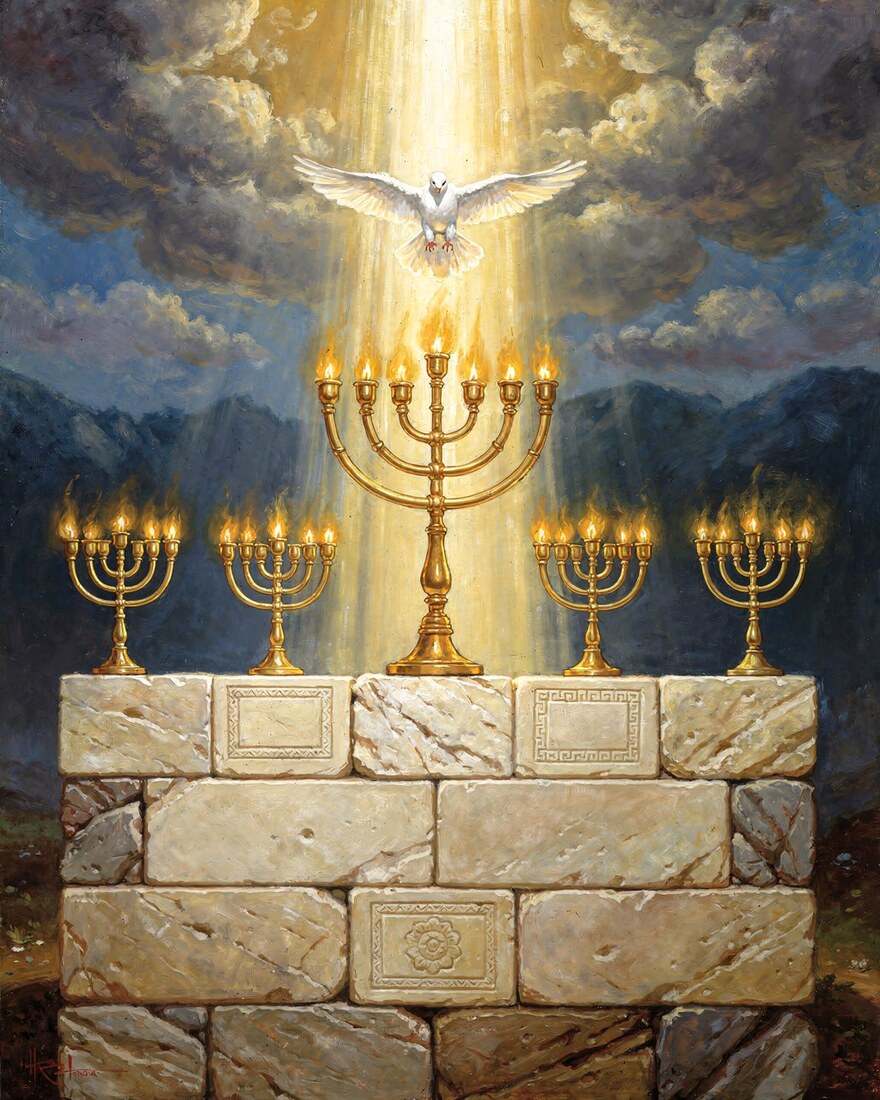
Read the second verse before you read the third. The earth was formless and empty. Darkness was on the surface of the deep. Nothing had shape, nothing had light, and there was no sign yet that anything ever would. And into that same sentence the text drops this: "Elohim’s Ruach was hovering over the surface of the waters." Hovering is not fixing. He is not repairing the darkness or arguing with it. He is over it, close, waiting. Only after that does Elohim say, "Let there be light." So the order of the whole story is set in two verses. Presence first. Order second. The Ruach did not arrive once the water was calm and the work looked promising. He was already there while it was still deep and dark and shapeless, and that is the first thing Scripture ever shows Him doing.
The Breath of Life
One verse, and it moves in two stages. First: "YHWH Elohim formed man from the dust of the ground." That is a finished body. Every part in place, lying in the dirt, complete and not alive. Nothing about it was faulty. It simply had no life in it, and dust cannot give itself any. Then the second stage. He "breathed into his nostrils the breath of life; and man became a living soul." Notice how near that is. Light was spoken from a distance. Sea and stars were spoken. This one was breathed, which means close enough to touch. And notice what makes the difference between a shaped thing and a living one. Not better material. Not more care in the shaping. Breath from Elohim, given at close range, and only then a living soul. Life was never something you have. It is something breathed.
The Sustainer
Watch the tense in the psalm. "You hide your face; they are troubled. You take away their breath; they die and return to the dust." Then: "You send out your Ruach and they are created. You renew the face of the ground." Created, in the present. The psalm is not looking back at the first week of the world. It is describing this morning. Every living thing is being held up by breath that is being lent right now, and the psalm treats withdrawal not as punishment but simply as a returning. Job says the same from the inside: "The Ruach Elohim has made me, and the breath of the El Shaddai gives me life." Made, then gives. The making is finished. The giving is not. Creation was never an event that ended. It is a hand that has not let go.
The Ruach as Artisan
The first person in all of Scripture said to be filled with the Ruach Elohim is not a prophet, a priest or a king. He is a craftsman. "Behold, I have called by name Bezalel" — named, and placed by tribe, before a single word is said about his ability. Then the filling: "in wisdom, and in understanding, and in knowledge, and in all kinds of workmanship." Read what that wisdom is for. Gold, silver and bronze. Cutting stones for setting. Carving wood. Nothing on that list is abstract. The Ruach's first recorded filling equips a pair of hands. And it is not a solo anointing — Oholiab is appointed alongside him, and wisdom is put "in the heart of all who are wise-hearted" so the work can be shared. Skill was never the lesser calling. Here it was the calling.